
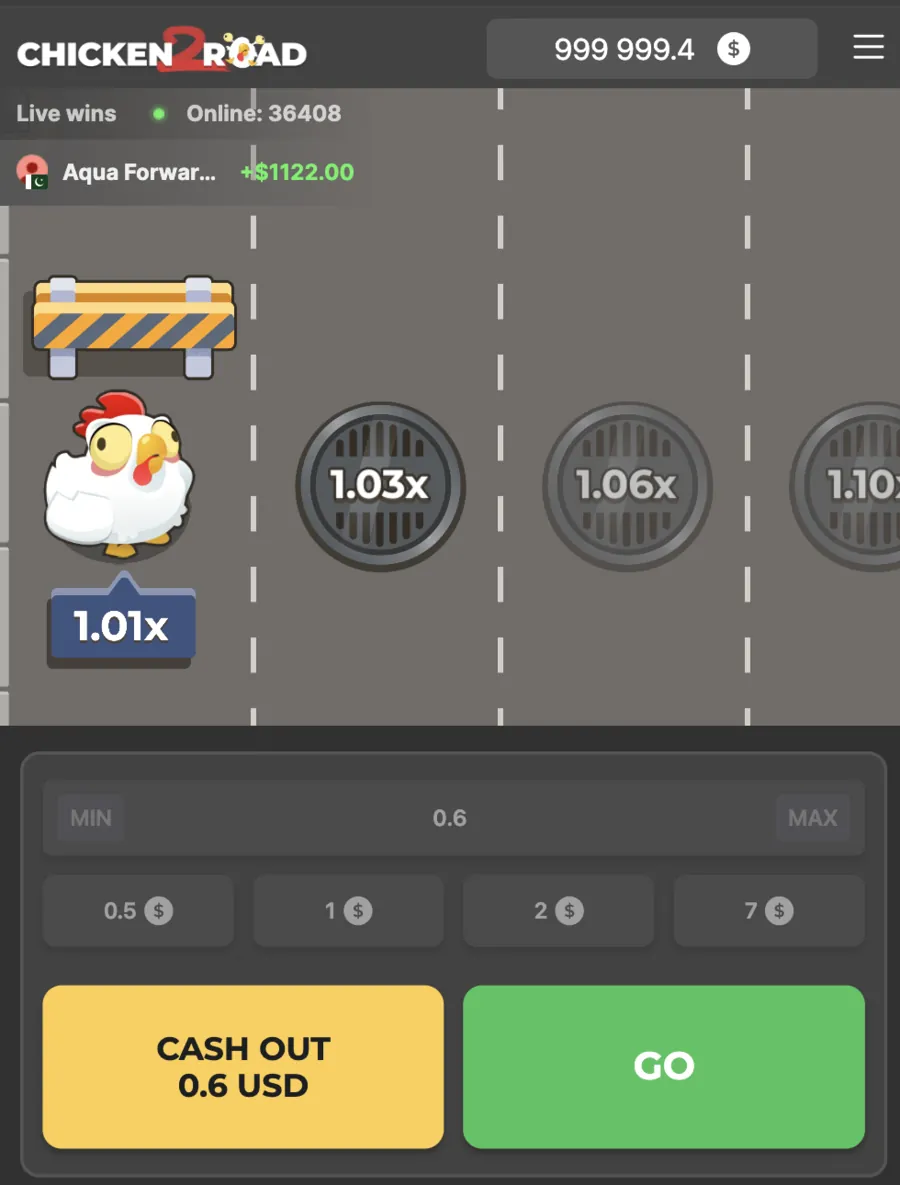
This guide explains Chicken Road Casino: How to Play Chicken Road from the player's seat: what you need to do first, what the interface is asking for, and which moments deserve extra attention. Read it once before the demo and once again after a few practice rounds. The second pass usually makes the rules feel more concrete because you have already seen the pace of the game.
A simple learning plan works better than guessing. Start with small demo rounds, test one feature at a time, and avoid changing your stake after every result. If something feels unclear, slow down and repeat the same setup until the decision becomes familiar.
If you move to real money, keep the session short enough that every decision still feels deliberate. That calm rhythm gives Chicken Road Casino: How to Play Chicken Road room to be entertaining without turning the rules into background noise.
Interface Breakdown
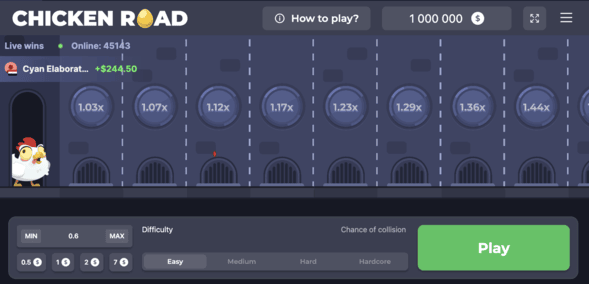
Chicken Road's interface has 4 main areas: the road game board (center), risk level selector (top), bet panel with Play button (bottom), and multiplier egg (on the lanes). All controls are accessible with one hand on mobile.
When I first opened Chicken Road, the interface felt immediately intuitive — which isn't something I say about every crash game. The visual design borrows from retro pixel-art roadside crossing aesthetics, and everything important is visible without scrolling.
The Game Board
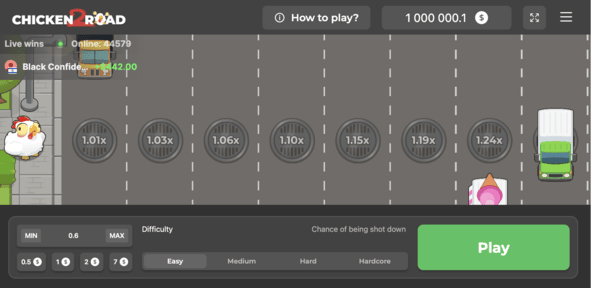
The center of the screen shows traffic lanes running vertically. Your chicken stands between the lanes. Cars approach from the top. On each side, you'll see barriers (yellow-black hazard stripes) that open and close as the chicken moves between lane sections. The green/red lights on the barriers indicate whether a car is approaching.
The chicken character itself is surprisingly well-animated. It has idle animations, a running animation during Bonus Run, and a distinctive "dollar eyes" expression when you hit a big win. Small detail, but it adds personality that most crash games lack.
The Bet Panel
Located at the bottom of the screen. From left to right:
- Bet amount field — shows current bet in USD (e.g., "0.2$"). Tap to enter custom amount.
- Minus/Plus buttons — adjust bet by fixed increments
- /2 and x2 buttons — halve or double your current bet quickly
- Play button — large green button. Changes to "Go" after round starts.
- Withdraw panel — shows potential cashout amount (e.g., "0.20$"). Tap to collect.
The Golden Egg Multiplier
This is Chicken Road's signature visual element. A large golden egg appears on the lanes showing your current multiplier. It starts at 1.01x and grows with each step. The egg has a thick black outline making it readable even on small screens.
Risk Level Selector
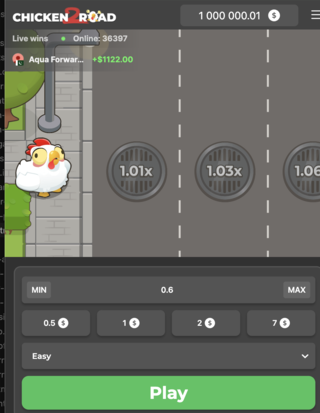
A horizontal bar above the game board with 4 options: Low, Medium, High, Extreme. Each option shows the maximum possible multiplier. The selected level has a highlighted background. You can only change this between rounds.
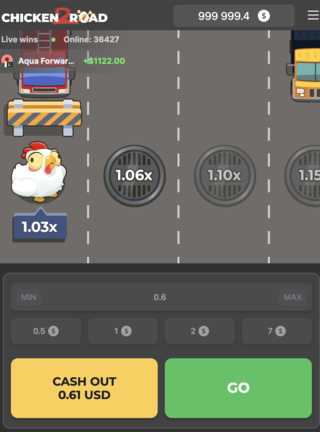
Gameplay Flow Diagram
Here's a visual overview of how a typical Chicken Road round plays out. The key decision point is at each step: do you cash out or keep going?
Step-by-Step: Your First Round
I'm going to walk you through exactly what happens from opening the game to collecting your first cashout. I'm using Low risk for this example since that's where I'd recommend any beginner starts.
Select Your Risk Level
Tap "Low" in the risk level bar at the top. You'll see "Max multiplier x62.93" appear. For your first few rounds, stick with Low — it gives the most frequent wins and lets you understand the rhythm of the game.
Set Your Bet Amount
Tap the bet field and enter your amount. For testing, I'd suggest $0.20 (the default on most platforms). Use the /2 button to go lower or x2 to go higher. The minimum is $0.10.
Press Play
Hit the green "Play" button. Your bet is locked in and the chicken appears on the lanes. The button changes to "Go" — this is now your cash out trigger for the next round.
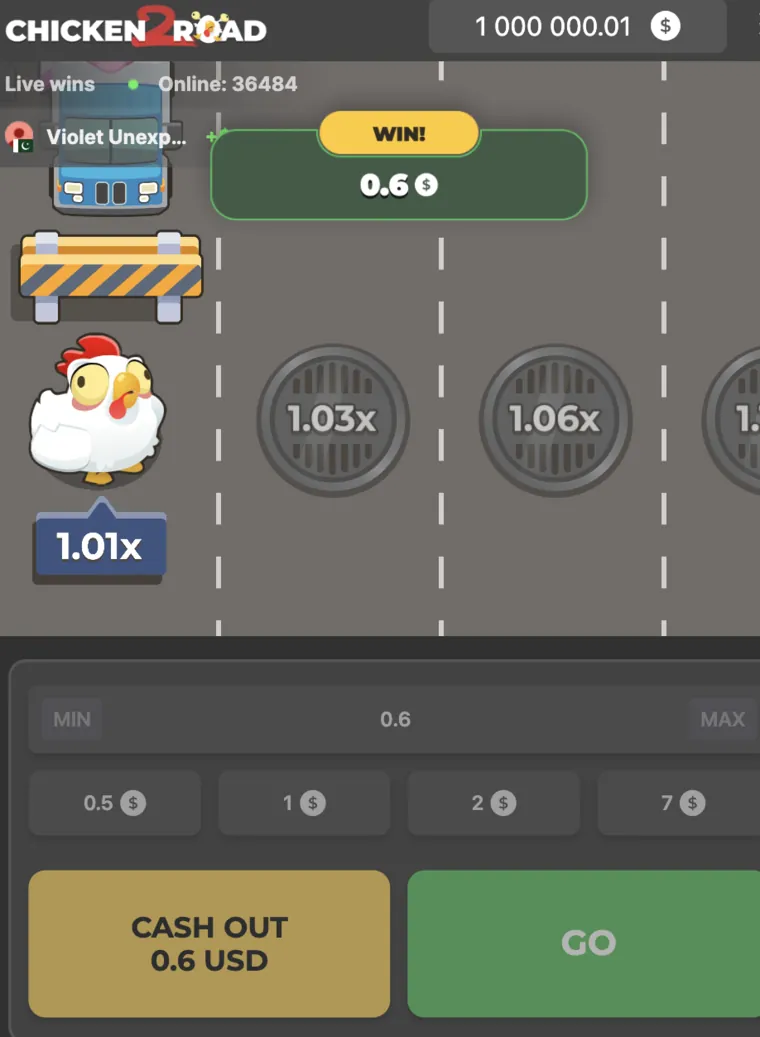
Watch the Multiplier Grow
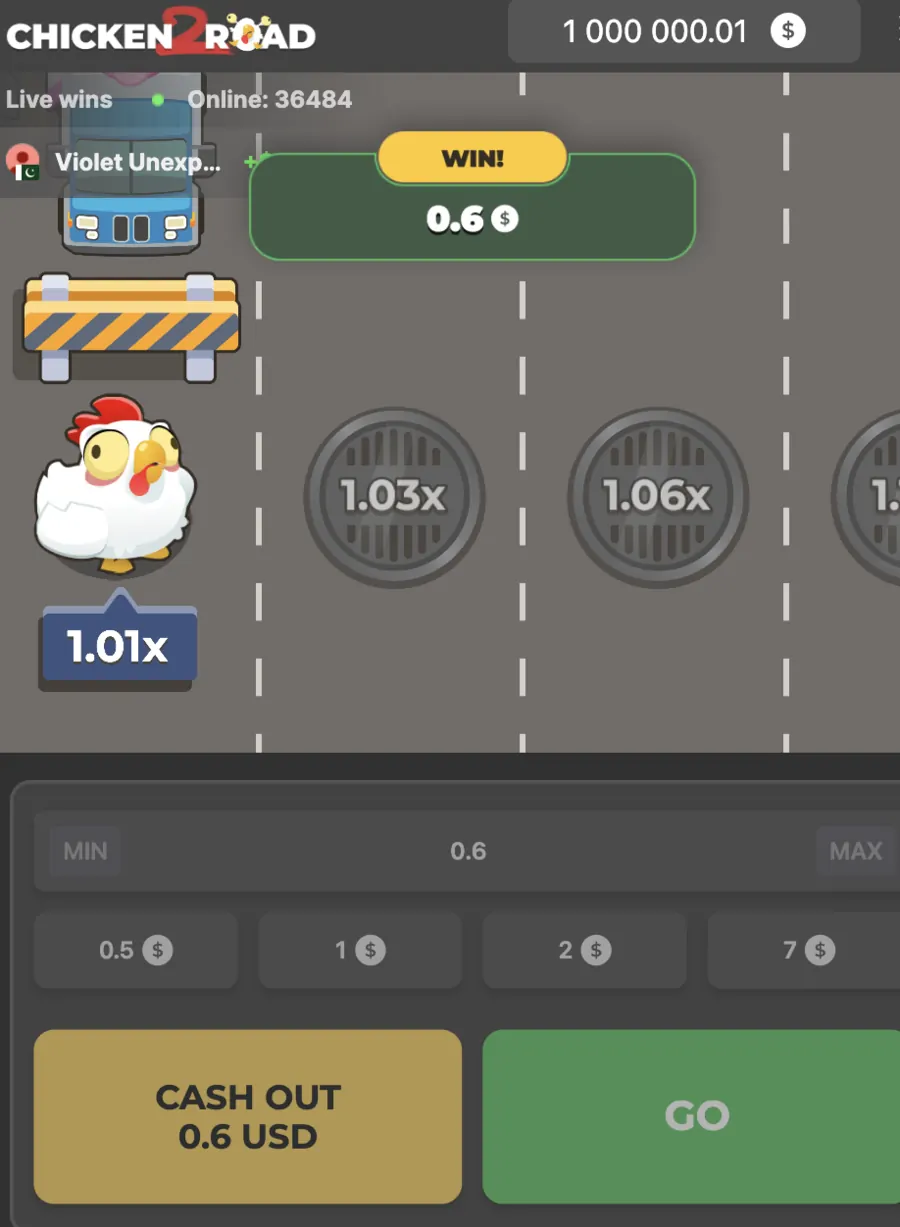
The golden egg appears showing your multiplier. It starts at 1.01x and climbs with each step: 1.05x, 1.10x, 1.15x, 1.20x... Each step takes about 1-2 seconds. The egg gets slightly larger as the multiplier grows — a nice visual touch.
Cash Out or Keep Going
This is the core decision. The Withdraw panel shows your potential payout (bet × multiplier). Tap "Withdraw" to collect. If you wait too long and a car arrives — your bet is gone. On Low risk, I typically cash out between 1.5x–2x for consistent returns.
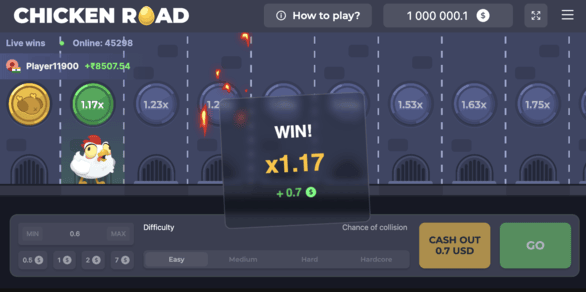
Win Confirmation
If you cashed out successfully, a "You Win!" banner appears with your multiplier and payout amount. The chicken does a celebration animation with dollar signs in its eyes. Your balance updates immediately.
That's a complete round. The whole thing takes 10-30 seconds depending on how long you let the multiplier run. After collecting (or losing), you're immediately ready for the next round.
Want to practice without risk? Try the free demo mode — same mechanics, virtual currency.
Paytable & Multipliers
Unlike slot machines with fixed symbol payouts, Chicken Road's paytable is dynamic — your payout depends on when you cash out. Here's how the multiplier progression works for each risk level based on my testing:
| Step | Low Risk | Medium Risk | High Risk | Extreme Risk |
|---|---|---|---|---|
| 1 | 1.01x | 1.01x | 1.01x | 1.01x |
| 2 | 1.05x | 1.10x | 1.20x | 1.50x |
| 3 | 1.10x | 1.25x | 1.60x | 2.50x |
| 5 | 1.20x | 1.78x | 3.50x | 8.27x |
| 10 | 1.90x | 5.00x | 25x | 250x |
| 15 | 3.50x | 15x | 200x | 5,000x |
| 20+ | 8x–62x | 50x–267x | 1,000x–10,308x | 10,000x–55,833x |
Important note: these are approximate values from my testing sessions. The exact multiplier at each step varies because the step distance isn't uniform across rounds. The game uses a provably fair random number generator, so multiplier growth patterns differ each round.
The practical takeaway: on Low risk, reaching step 10 gives you roughly 2x your bet. On Extreme, the same step 10 could mean 250x — but you'll rarely get there because cars appear much more frequently.
For mathematical analysis of expected value at different cashout points, check my Chicken Road strategies guide.
Understanding Risk Levels in Detail
I've spent about 50 sessions on each risk level to give you an honest picture of what to expect. Here's my breakdown:
Low Risk (Max x62.93)
This is the "grinder" mode. Wins come frequently — I saw positive outcomes on roughly 70-75% of rounds. The trade-off? Multipliers stay small. Most of my cashouts were in the 1.1x–1.5x range. Cars appear less often, and when they do, they're usually after step 10+. Good for bankroll preservation and learning the game.
Medium Risk (Max x267.56)
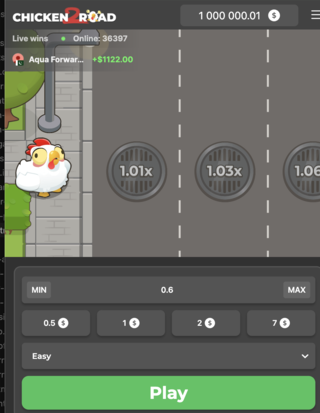
My personal sweet spot. Win frequency drops to maybe 50-60%, but multipliers reach meaningful levels more often. I've hit 5x–10x multipliers a few times per session on Medium. The car frequency feels balanced — enough tension to be exciting without being frustrating.
High Risk (Max x10,308.99)
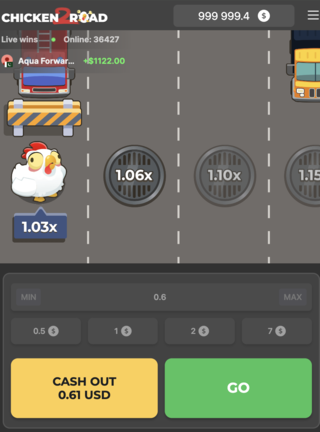
This is where things get volatile. I've gone 8-10 rounds without a cashout above 1.5x, then suddenly hit a 25x. My bankroll swung wildly. If you play High, you need at least 50 bets worth of bankroll to survive the dry streaks. Not for the faint-hearted or thin wallets.
Extreme Risk (Max x55,833.16)
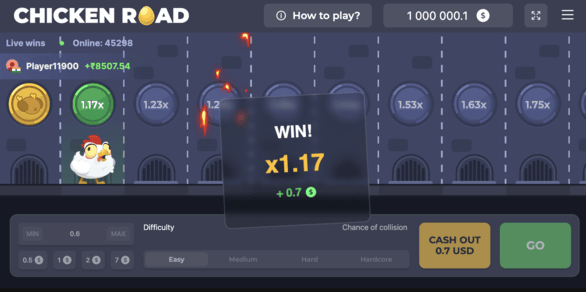
Honestly? This mode felt like lottery tickets. Cars appeared on step 1 or 2 in over half my rounds. When something did hit, the multipliers were wild — my best was 8.27x, but I've seen screenshots of 100x+ hits from other players. I'd only recommend Extreme with money you're genuinely prepared to lose in minutes.
Bonus Run Feature
Bonus Run is Chicken Road's special mechanic, and it took me a few sessions to fully understand how it works. Here are the rules from the game's info panel, confirmed through my testing:
- Triggers from step 2 onwards — it cannot appear on your first step
- Activates when a car is approaching — the chicken doesn't just avoid the car, it dashes forward through multiple steps
- Skips intermediate steps — during Bonus Run, the chicken moves forward instantly, collecting the final multiplier (not intermediate ones)
- Risk level affects run length — higher risk = shorter Bonus Run. On Low, the chicken might dash 3-4 steps. On Extreme, maybe 1-2.
- If the car hits during Bonus Run — you lose. Bonus Run doesn't guarantee safety.
- Does NOT activate if no car — it only triggers when there's an actual car on the stepping stone
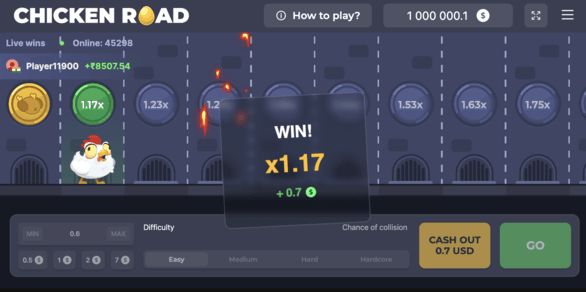
In my experience, Bonus Run added real excitement to otherwise routine Low-risk sessions. On one memorable round, the chicken dashed from step 3 to step 7, jumping my multiplier from 1.10x to 1.90x in one motion. Not life-changing money, but satisfying gameplay.
The Bonus Run animation is also well done — the chicken does a full sprint with a "RUN!" text appearing overhead. It's one of the moments where Chicken Road's visual design really shines.
Auto-Cashout & Auto-Bet
Auto-cashout is available on most casino platforms running Chicken Road. Here's how I use it:
Auto-Cashout
Before pressing Play, you can set a target multiplier. When the golden egg reaches that value, the game automatically collects your winnings. This is useful for:
- Consistent strategy execution (e.g., always cashout at 1.5x)
- Protection against disconnects — if your internet drops, auto-cashout still fires
- Removing emotional decision-making from gameplay
I set mine to 1.5x on Low risk for most sessions. It means smaller wins, but my session lasted longer and my bankroll stayed more stable compared to manual play.
Auto-Bet
Some casino platforms offer auto-bet (auto-play) for Chicken Road — but not all. This feature automatically places the same bet after each round. If available, use it with auto-cashout for a fully automated strategy. But be careful: auto-bet can drain your balance fast on High/Extreme risk if you're not watching.
My advice: never use auto-bet without auto-cashout. And never use auto-bet on Extreme risk unless you enjoy watching your balance evaporate.
Common Mistakes to Avoid
After 200+ sessions, here are the mistakes I see beginners make (and a few I made myself early on):
1. Starting on High or Extreme Risk
I get the temptation — those max multipliers look incredible. But Extreme risk will eat through your bankroll before you understand the game's rhythm. Always start on Low or Medium. Learn the mechanics, then scale up when you have the bankroll to absorb losses.
2. Chasing Losses by Increasing Bets
Classic gambler's fallacy. After 5 consecutive losses on Extreme, doubling your bet won't "recover" anything — each round is independent. The RNG doesn't remember your previous results. Stick to your session budget and bet size regardless of results.
3. Ignoring the Withdraw Button on Mobile
The Withdraw button is smaller than I'd like on mobile. I've missed cashouts because I tapped slightly off-target. My workaround: use auto-cashout on mobile instead of manual tapping. It's faster and more reliable.
4. Not Using Auto-Cashout for Consistent Play
Manual play is fun, but it invites emotional decisions — "just one more step." Auto-cashout at a predetermined multiplier removes the temptation and produces more consistent results over time.
5. Playing Without a Session Budget
Before every session, I decide: "I'm playing with $20 today. When it's gone, I stop." This single rule has saved me more money than any strategy. The 3% house edge means you'll lose on average — the only question is how slowly. Budget accordingly.
Ready to put these tips into practice? Start with the free demo, then read my strategy guide for bankroll management math.
Content Update History
- — Added Bonus Run details, updated risk level screenshots, added gameplay flowchart
- — Updated paytable with Medium/High risk data from 50+ sessions per level
- — Initial publication with interface breakdown and step-by-step guide
Frequently Asked Questions
The number varies by risk level and the round's random outcome. On Low risk, rounds frequently reach 15-20+ steps. On Extreme, rounds often end within 3-5 steps. There's no fixed cap — the chicken keeps moving until a car hits or you cash out.
No. Risk level is locked once you press Play. You can change it between rounds by tapping a different option in the risk selector bar. This applies to both manual play and auto-bet mode.
If you have auto-cashout set, the game will collect at your target multiplier regardless of connection status. Without auto-cashout, the outcome depends on the casino's disconnect policy. Most platforms will auto-cash at the next available step. I'd always recommend setting auto-cashout as a safety net, especially on mobile.
Yes, most casino platforms offering Chicken Road include auto-cashout. You set a target multiplier before the round, and winnings are automatically collected when reached. I use auto-cashout at 1.5x on Low risk for consistent results.
The golden egg is Chicken Road's multiplier display. It appears on the lanes at each step, showing your current potential payout multiplier. If it shows 1.78x and your bet is $10, pressing Withdraw gives you $17.80. The egg grows slightly larger as multipliers increase.
Bonus Run triggers from step 2 onwards when a car is approaching the chicken's current position. During Bonus Run, the chicken dashes forward through multiple steps instantly. The run length depends on risk level — Low risk gets longer runs (3-4 steps), Extreme gets shorter ones (1-2 steps). Bonus Run isn't guaranteed safe — a car can still hit during the dash.
Yes. Chicken Road is HTML5-based and runs in any modern mobile browser — Chrome, Safari, Firefox. No app download needed. For the best experience, use a stable Wi-Fi connection and set auto-cashout as backup. You can also save it to your home screen as a PWA. See my mobile installation guide for details.
Sources
- Chicken Road in-game interface and rules panel — screenshots taken March 2026
- Multiplier data from 200+ test sessions across Low, Medium, High, and Extreme risk levels
- Bonus Run mechanics confirmed via in-game info panel and 50+ observed triggers
June 23, 2026 play guide update
Chicken Road Casino play guide update for June 23 focuses on the step between reading the rules and opening a live round. The how-to page should make lane timing, step risk, cash-out choices, demo access, and mobile route clarity understandable before the player sees a deposit button. A good guide does not only say when to tap, cross, climb, or cash out; it also explains what can be checked in demo mode and what belongs to the casino account screen.
Before playing for money, use free rounds to confirm car movement, target step, stake range, loss cap, and country-specific casino rules. Then set a small session limit and keep the stake flat even after a failed attempt. Bonus offers should be read outside the game flow for wagering, max bet, eligible games, expiry, KYC, withdrawal review, currency support, and country access. Mobile players should use verified browser play or an official operator app, not copied APK files. Chicken Road Casino is easier to treat as entertainment when the guide keeps controls, risk, and stopping rules together.